Why I Started Posting Tech Content on X and LinkedIn
In April 2026, I was searching for college guidance videos and opportunities for students before joining college.
While scrolling online, I came across the Google Gemini Student Ambassador Program. Since I had a few months free before starting college, I thought, "Why not apply? I have nothing to lose."
The application asked for basic details, but then I noticed something interesting: it also asked for social media profiles such as LinkedIn and Instagram.
That made me stop and think.
Why would a company like Google care about someone's online presence?
That's when I realized something important:
In today's world, having skills is important, but having visibility is important too.
Skills Alone Are Not Enough
Imagine two students.
Both know C++, web development, and problem-solving.
Both spend the same number of hours learning.
Both are equally talented.
The difference is that one person shares their journey online while the other keeps everything to themselves.
The second person may still get opportunities through friends, referrals, and word of mouth.
But the first person can reach thousands or even millions of people through a single post.
- Recruiters can discover him.
- Developers can connect with him.
- Companies can notice his work.
- Potential clients can find him.
The skills are the same. The visibility is different.
My First LinkedIn Post
On May 1, 2026, I made my first LinkedIn post.
At that time:
- 0 followers
- 0 connections
- No understanding of the LinkedIn algorithm
- No personal brand
- No audience
I wasn't a LinkedIn expert. I didn't know which content worked. I didn't know how often to post.
I simply started.
Instead of waiting until everything was perfect, I decided to learn by doing.
The Results After One Month
What happened next surprised me.
Within roughly one month, I grew to:
- 1,000+ LinkedIn followers
- 500+ connections
- 130,054+ impressions
- 82,672+ members reached
- 300+ followers on X
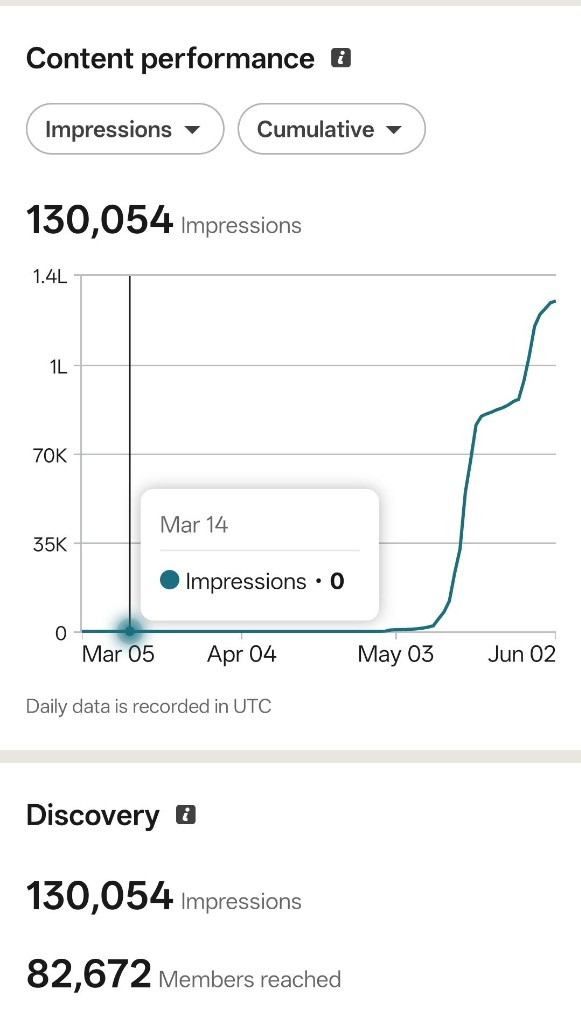
I know these numbers are small compared to large creators, but for someone who started from zero, they proved one thing:
Growth is possible if you stay consistent.
Some of My Best Performing Posts
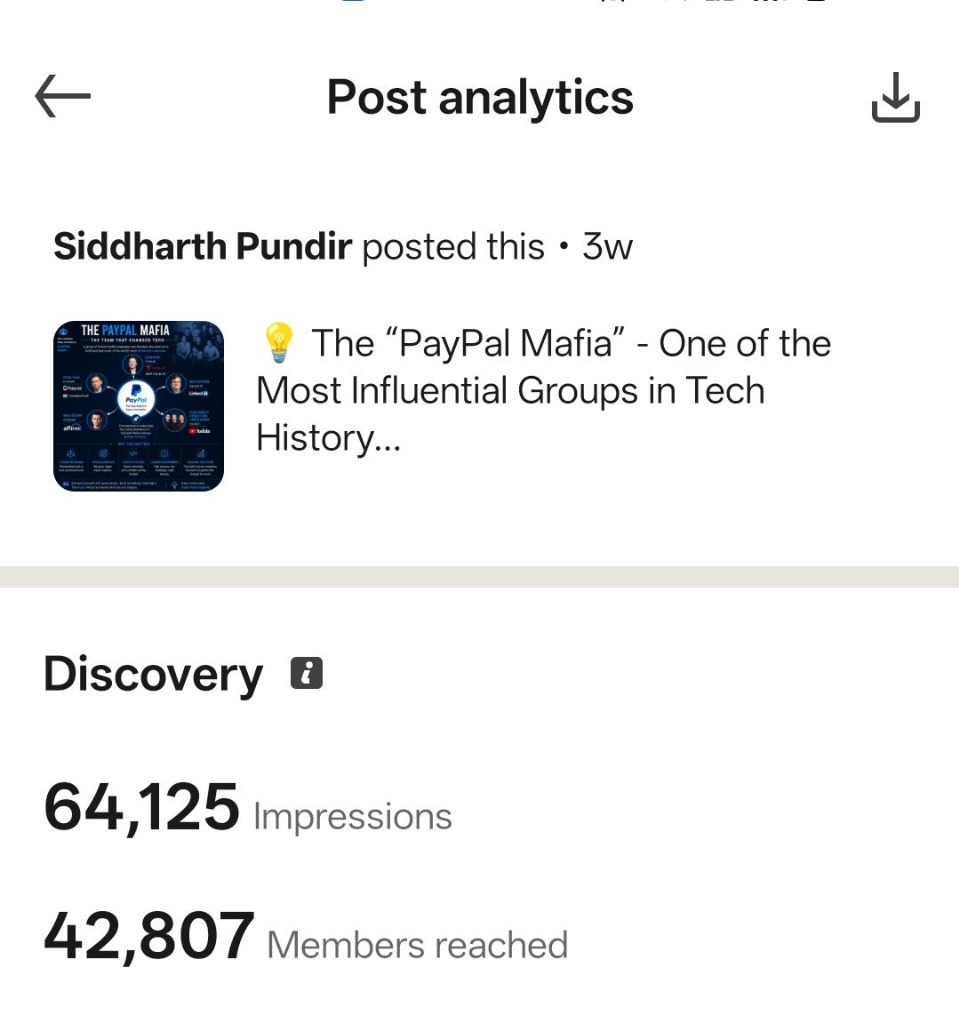
One of my posts about the PayPal Mafia reached more than 64,000 impressions.
 View post on LinkedIn →
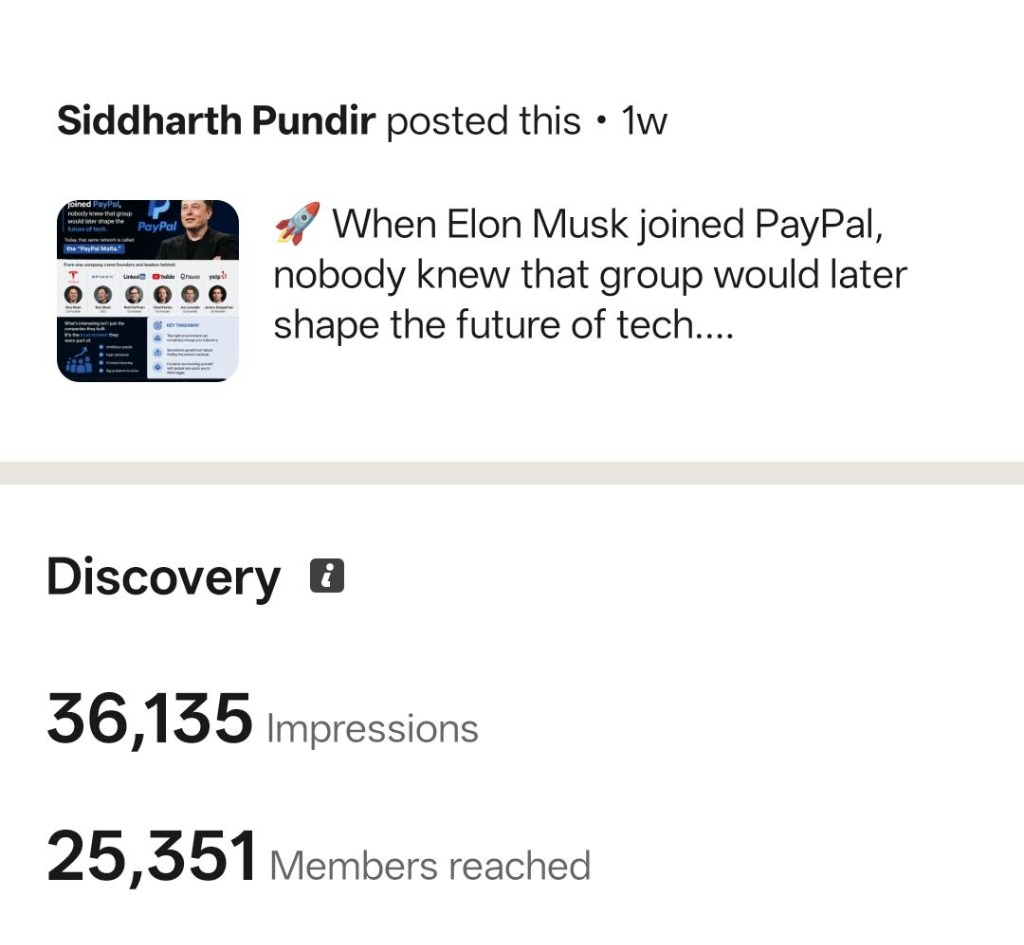
Another post crossed 36,000 impressions.
 View post on LinkedIn →
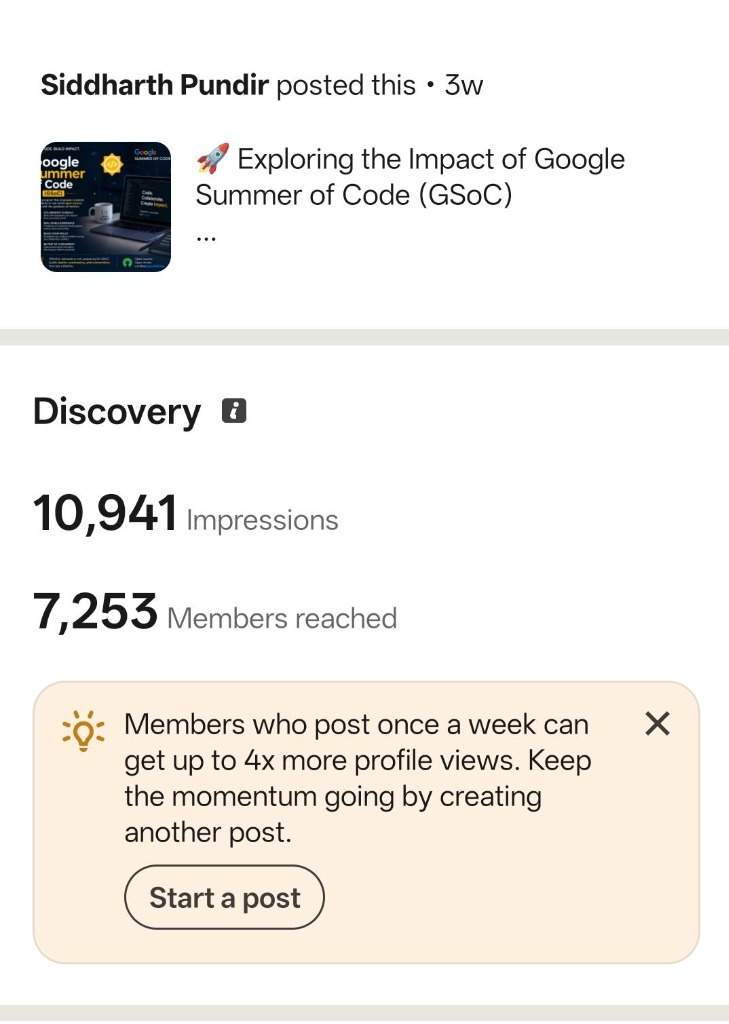
Even a post about Google Summer of Code crossed 10,000 impressions.
 View post on LinkedIn →
These results were achieved within my first month of actively posting.
What Worked For Me
After experimenting for several weeks, I realized a few things:
1. Consistency Beats Perfection
Many people spend weeks planning their first post. I simply started posting and improved along the way.
2. Learning Publicly Helps
Whenever I learned something interesting, I shared it. This helped me remember concepts better while also helping others.
3. Every Post Teaches Something
Some posts performed well. Some performed badly. Both were useful because every post provided feedback.
4. Opportunities Follow Visibility
The more people see your work, the more opportunities naturally appear. That doesn't guarantee success, but it definitely improves your chances.
My Biggest Lesson
If I had to summarize everything I learned in one sentence, it would be this:
Consistency and not giving up matter more than quality in the beginning.
Most people never start. Others quit after a few posts. Very few stay consistent long enough to see results.
You don't need thousands of followers to begin. You don't need perfect content. You don't need to be an expert.
You simply need to start.
What's Next?
This is only the beginning.
As I start my Computer Science journey at Chandigarh University, I plan to continue documenting:
- AI
- Web Development
- C++
- Projects
- College experiences
- Startup ideas
- Career growth
I don't know exactly where this journey will lead. But I know one thing: Starting was worth it.
Connect With Me
Follow my journey here:
- LinkedIn → linkedin.com/in/siddharthpundir
- X → x.com/sidpundirdev
- Portfolio → siddharthpundir.com